

Perhaps nothing I’ve done has gone from shitposty to serious as fast as my most recent project: Bucket Art. It began as an idle doodle made in the margin of my paper notebook during a long business meeting (at an AI company appropriately enough). That led to a couple of months of daily evening painting sessions on my iPad, which resulted in the set of 41 paintings you can see at my gallery page above. Now there’s a trained model on a platform called titles.xyz, based on my hand-painted ones, that anyone can use not only to generate images in the Bucket Art style, but mash up with models published by other artists.
As of this writing, 38 people have published 148 paintings wholly or partly based on the Bucket Art model. You’ll need an Ethereum wallet to try it out, but you don’t have to pay unless you want to publish or mint something.
And via a Secret Collaborative Project ™ I can’t talk about yet, Bucket Art should break into the serious institutional art scene via a gallery exhibition next year. At that point, I’ll grow a goatee, start sporting a beret, and writing (with AI assistance of course) an artist manifesto on what I’ve started calling Generative Impressionism.
Housekeeping note: We’ll have a year-end Contraptions Book Club hang on Zoom on Friday, December 19, at 9 AM Pacific (1700 UTC). Capacity limited. RSVP here to get details.
The original doodle where this journey started was a bunch of stacked line segments overlaid with some random strokes, which triggered a bit of pareidolia — I began seeing the contours of a waterfall. I added more strokes to exaggerate the emerging effect and ended up with this, the original piece of proto Bucket Art (though a bucket was not yet involved).
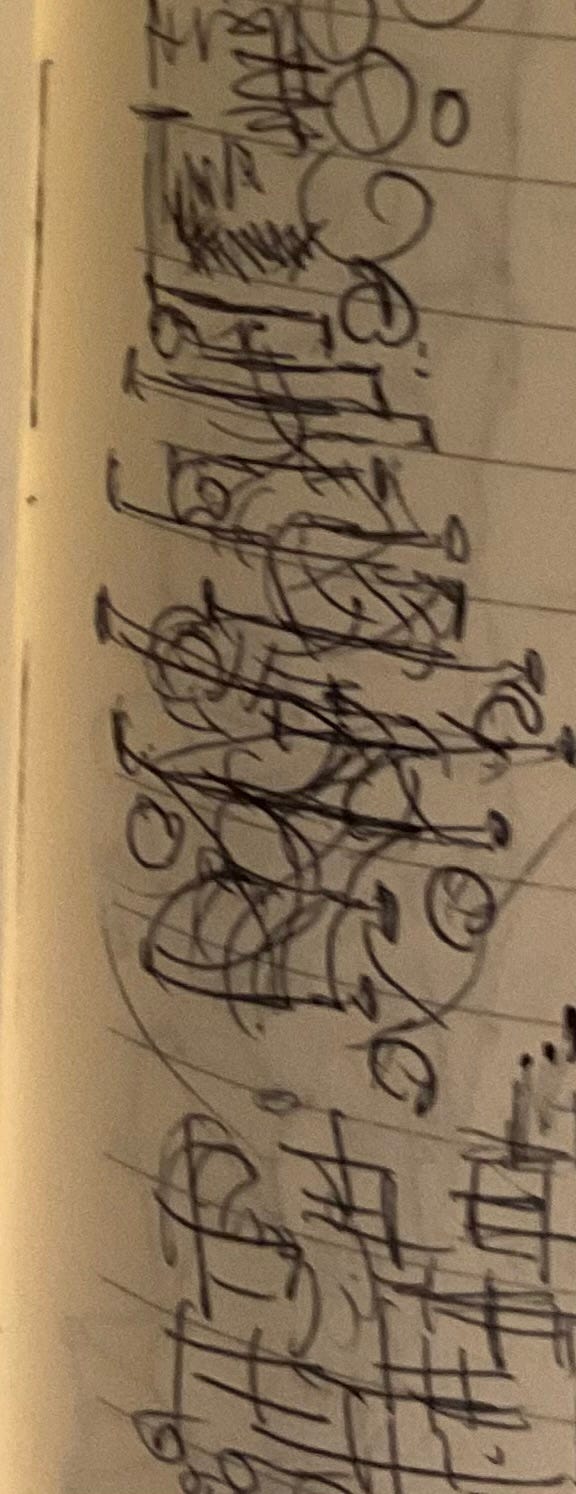
It struck me that this doodle could go places if I used an iPad, so I started down that path, making 1-2 pieces almost every day for two months. The result is the set of 41 images on the gallery page.
The first digital bucket art piece I made was Boat 1. This one was pure pareidolia, (ie, I spotted the boat in a random field; I didn’t start out wanting to paint a boat).
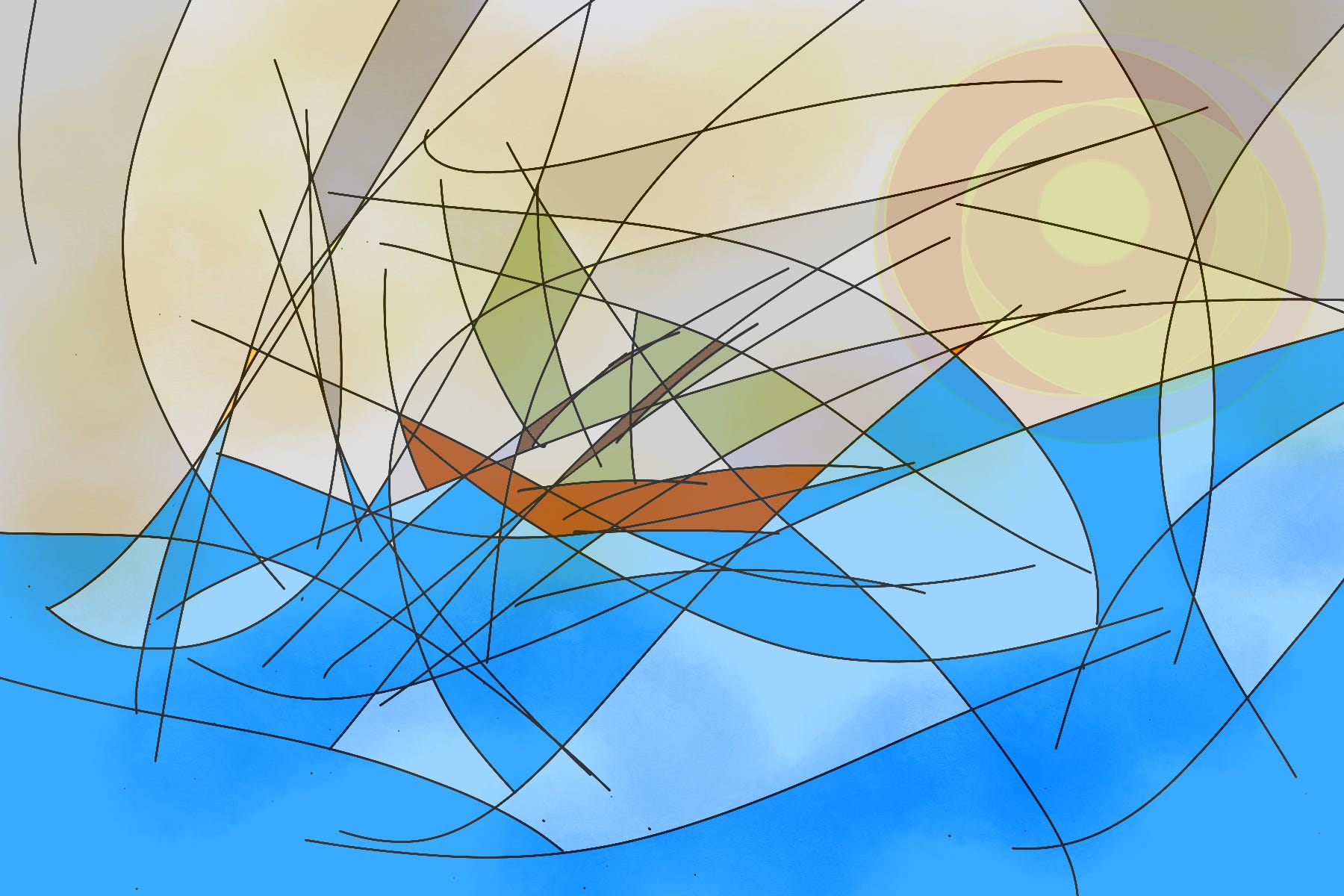
This one is not particularly polished or complex, but it’s one of my favorites. Not just because it was the first one I made, but because it’s near-pure emergence from the configurancy of interacting elements. It has a vigor and liveness that perhaps my more mature pieces lack.
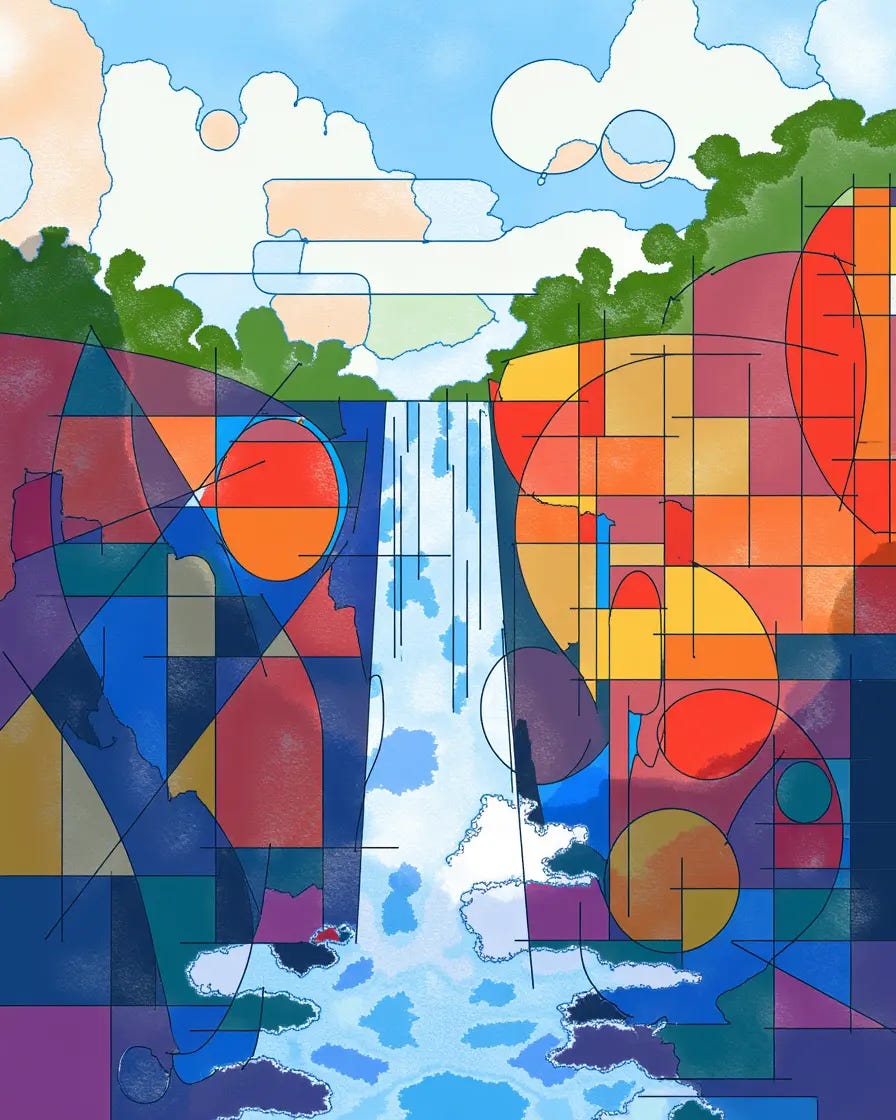
Here is a more complex one, and another one of my personal favorites, Waterfall 5. Here I started out wanting to make a waterfall, and had a clear plan for how to get there. Waterfalls remain among the easiest motifs to target with bucket art.
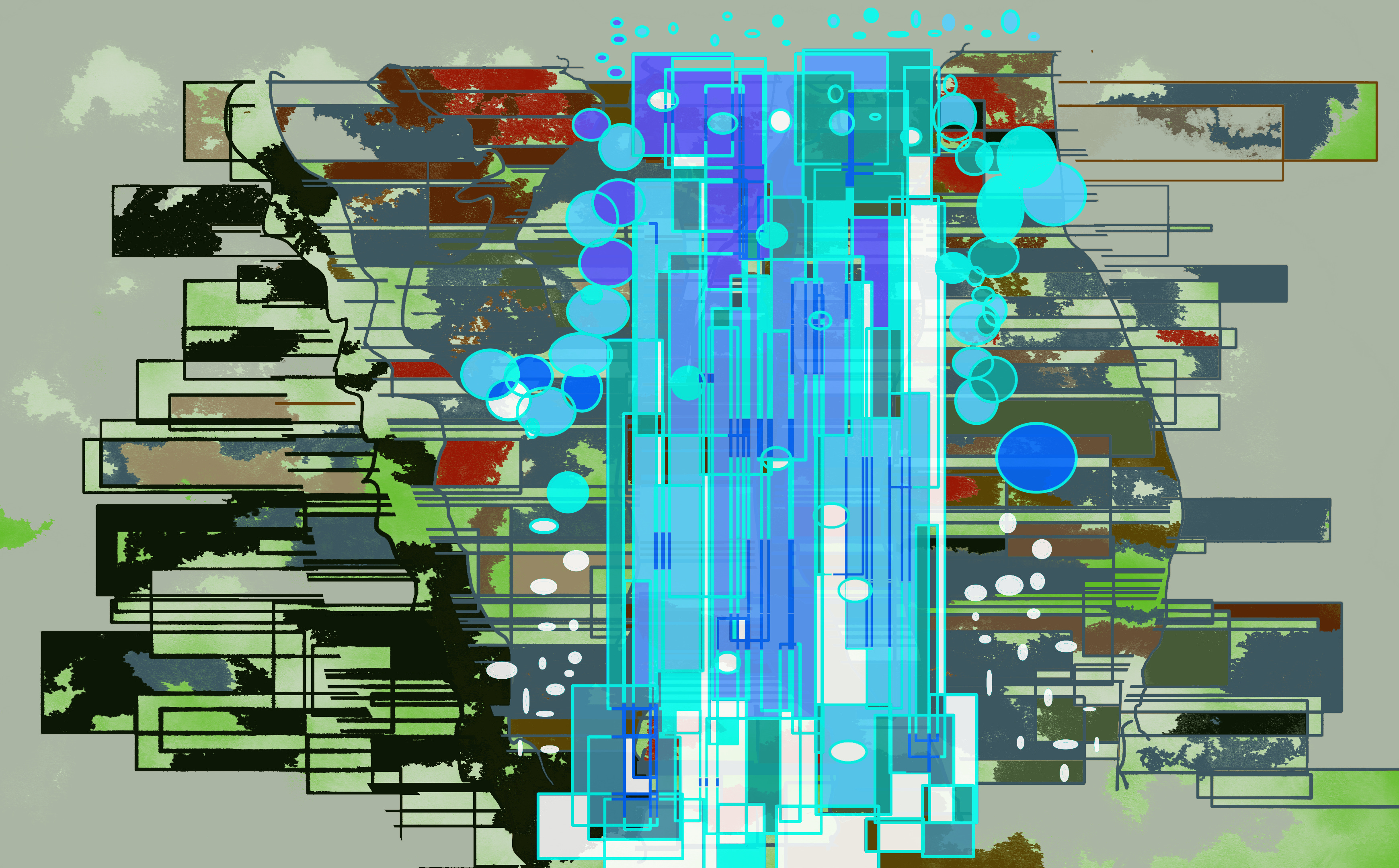
As it turned out, the technique I was playing with lends itself very well to training (well, fine-tuning) an image model.
Here is a waterfall image generated by the Bucket Art model on Titles. In this case, I think my best hand-crafted waterfalls have more pizazz to them, but this easily beats my median hand-crafted waterfall.
One of the themes where I think the model does better than me even at my best now is ships. You’ll see several ship paintings in my gallery page, but here is one made by the model. The spirit and aesthetic of the technique are preserved, but this is probably more sophisticated than any of my own ship paintings.
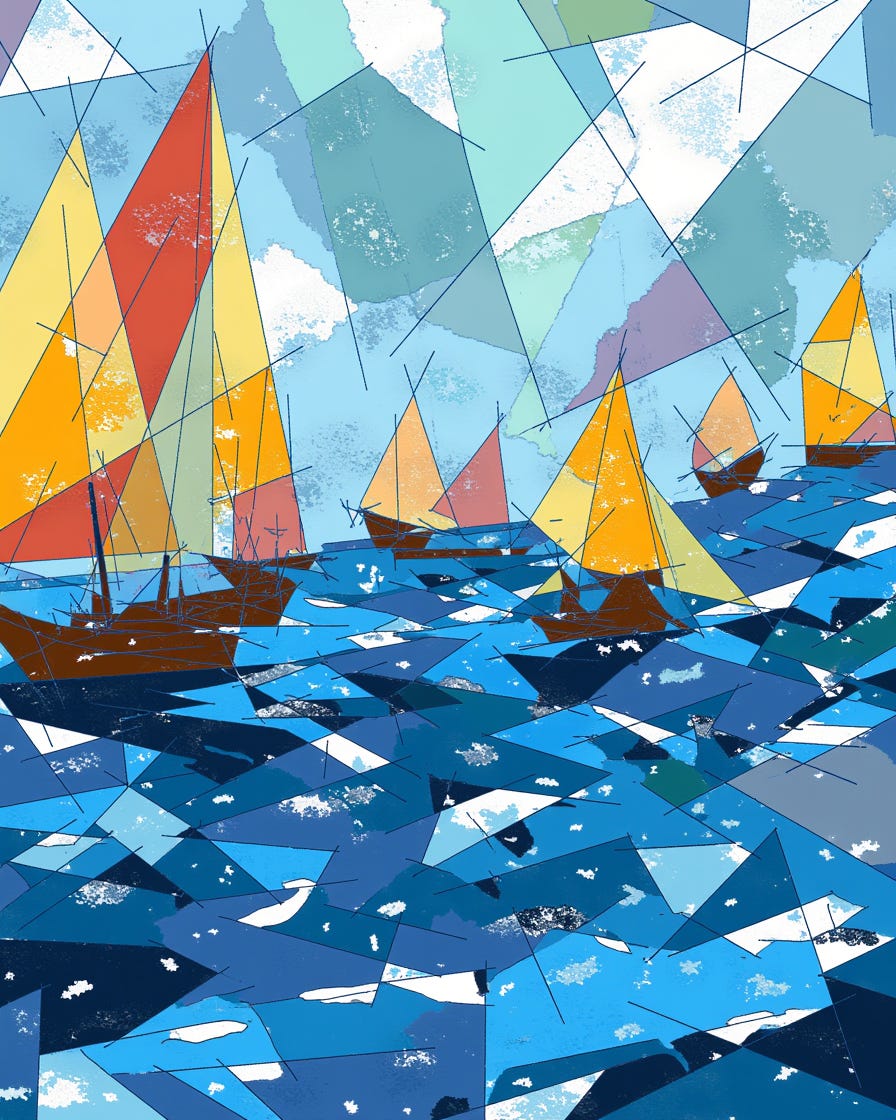
A peek at the current state of the story, here is an image generated by composing my model with another model created by James Langdon. Both of us earned a few pennies in the process of this image being created and published.
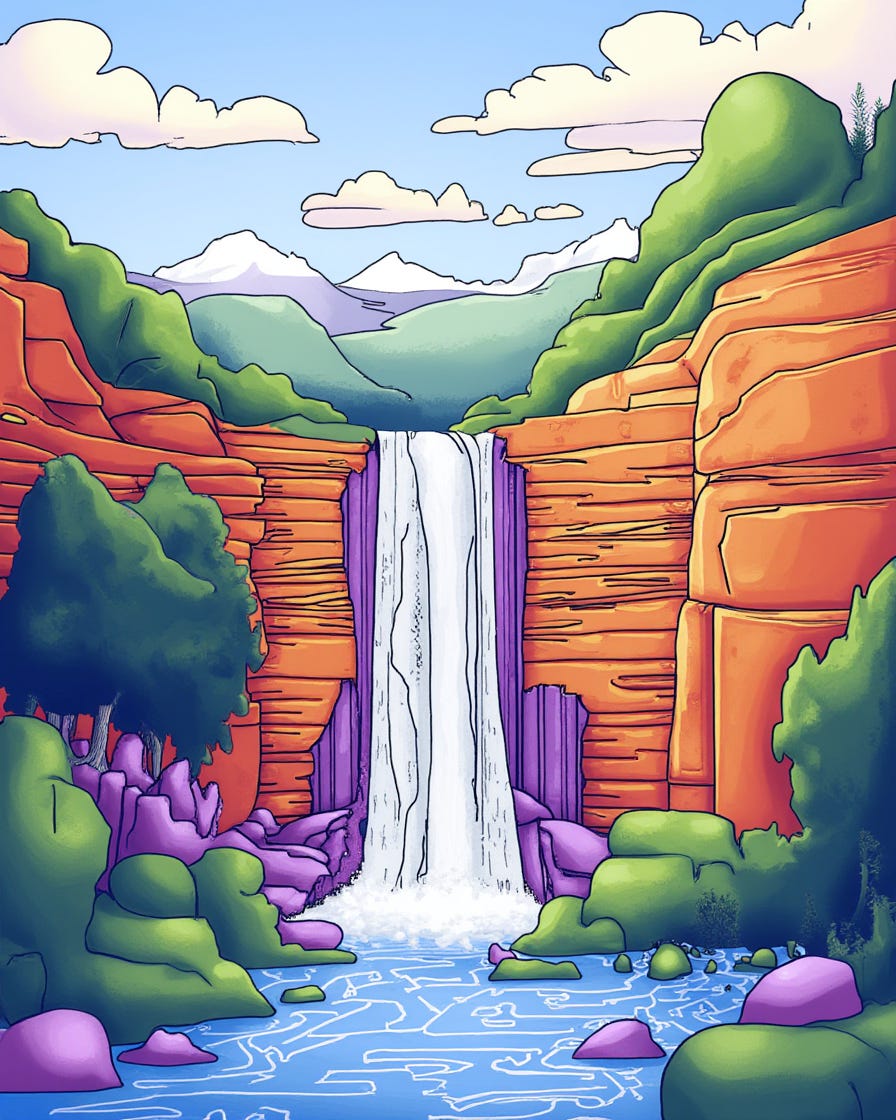
Go explore the other paintings on Titles and make your own. Post any particularly good ones here (and publish them if you like!). The mashup tool is still in beta, but you can make pure bucket art paintings.
The generativity already on display is dizzying. Not all appeal to me personally, but each image seems to reveal something interesting about what happens when you start doing compositional art where models trained on artists are the brushes/filters.
A brief note on the technique, not because I’m expecting to create a tribe of bucket artists, but because it illuminates how AI based sociality and creativity work, and how they entangle human actions and perceptions with machine actions at a very low level, at both individual and social levels.
I call it bucket art because the main tool is the flood fill tool, usually represented with the bucket icon in painting apps. Here is what it looks like in the app I use, Autodesk Sketchbook on iPad.

You can learn more about how to hand-make these yourself on this how-to page I added to my gallery site, but if you just want images in this style, just use the model on Titles.
The platform, titles.xyz, makes really clever use of AI fine-tuning alongside blockchain rails for composability with attribution, payments flows, and provenance tracking. Every generated image can be traced back to the set of artists whose original works provided the training data, with meaningful quantitative weighting of the contributions (based on how strongly it was weighted in the generation).
Of course, there is an underlying generic image model too, but provenance is crystal clear from the point at which individual artists supply their art for training — in the form of an NFT collection. This is a clever use of what I’m thinking of as Second Wave NFTs, which are closer to cheap laptop stickers than gallery fine art.
The point of having the training set published as NFTs is to trace the generated imagery back to an auditable starting point. The original images can still be minted of course (there’s still a bunch left if you want one) at $1, but what makes the model interesting is that generated images downstream of the training images can also be minted as NFTs at $1, triggering payment flows to the “training” artists. These generated images are also dirt-cheap unlike the generative art in the first NFT wave, which often sold for gallery prices. This second wave NFT scheme is basically micropayments plumbing for extreme cheap volume artwork.
There’s going to be more to this story, both on the artistic front, and the technical mechanics front, but for now, have fun playing with the model.