

As you may know, I’m one of the editors of the year-old Protocolized magazine. I’ll be helping run an online writing workshop for it this weekend (Friday/Saturday) and I’d like to invite those of you with writing interests to join. Read on for details and some reflections.
It will be a T-shaped workshop: Broad horizontal coverage of writing magazine-style longform fiction and nonfiction for the 2026 zeitgeist, especially in AI-forward ways, and deep vertical coverage of protocol fiction and nonfiction in particular, which have their own emerging genre logics and grammars. It should be of interest to all writers who like to be on the bleeding edge of text as a medium, whether or not you want to write on protocolish themes.
If the anti-AI Butlerian jihad crazies haven’t gotten to you yet, join us on the Dark Side and get ready to fire ze slop cannons.

Our goal is to both contribute to the broader writing and publishing knowledge commons on the emerging publishing frontier, and to cultivate our own network of contributors. The workshop is free, and we hope to find at least a few new talented voices to join our growing community of contributors.
Workshop Details
The Protocolized writing workshop will be four online sessions: two 60-minute sessions on Friday 20th, and two 90-minute sessions on Saturday 21st, at 9AM and 3PM on both days. A screenshot of the agenda is below. Don’t miss the first session — it might sound specialized, but it’s actually going to be a fascinating case study on how to bootstrap a publication in 2026. At least Year 1 of such bootstrapping:

We’ve already run several in-person writing workshops over the last year, but this will be our first time running one online for a general audience.
Editing Protocolized has been one of the most interesting writing and editing adventures I’ve ever been part of. Not only are we trying to catalyze fiction and nonfiction around a whole new field we’re trying to meme into existence (Protocol Studies), we made the decision right at the beginning to be aggressively AI-positive, and actively encourage contributors to use AI and get good at it. And we don’t expect anyone to do this by themselves — we have an active writing Special Interest Group (SIG) going in our Discord, with regular calls and an active channel, and a pitching forum where others can help you refine your ideas and pitches.
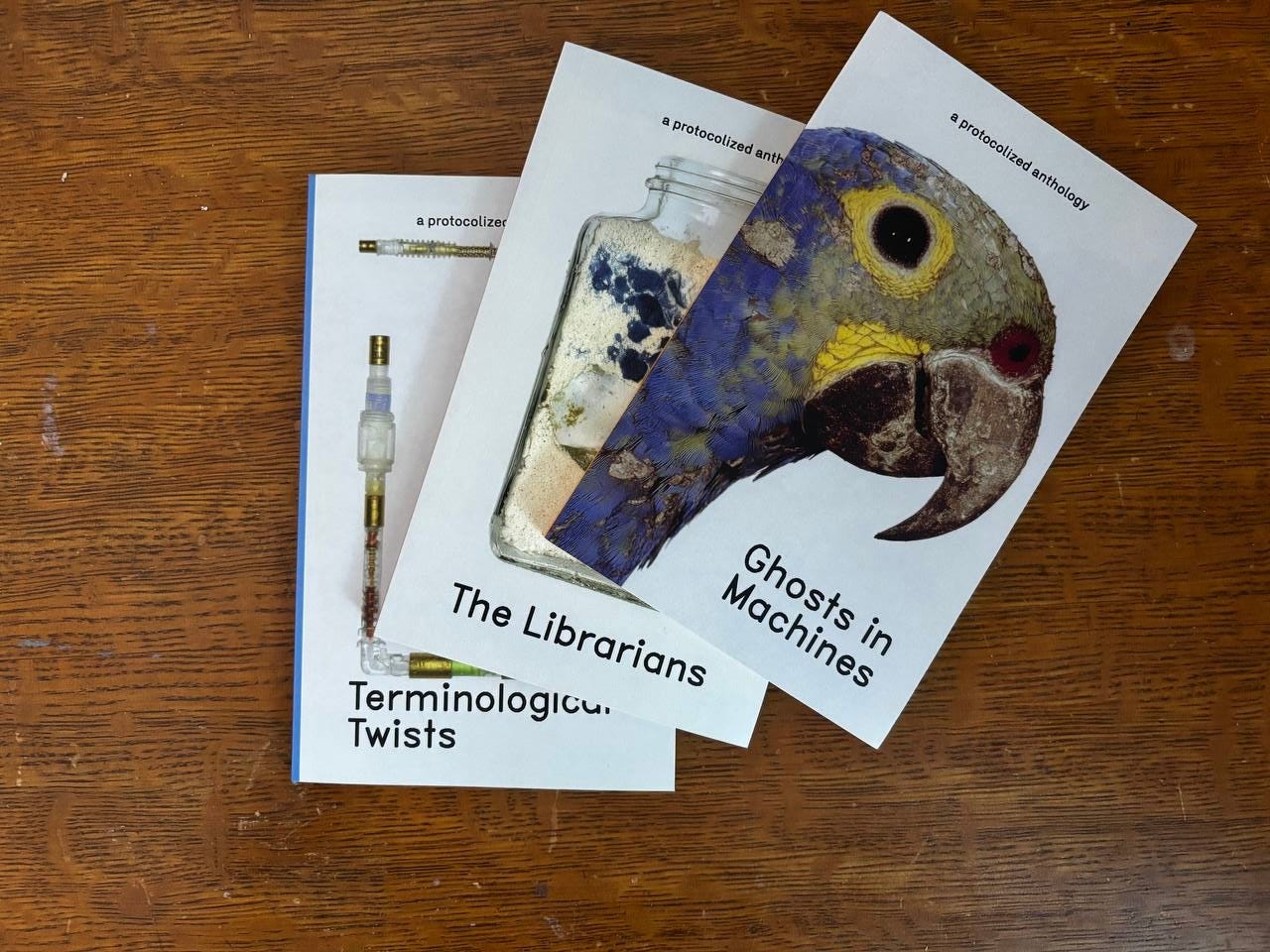
We’ve now logged a year of experience on what genuinely feels like a new frontier of publishing, in terms of both form and content. We’ve published contributions from 34 writers, and produced 3 fiction anthologies. And our nonfiction pipeline is starting to ramp.
I can’t reveal much about our cunning plans right now, but 2026 is going to be a big year for us. Starting with this writing workshop.
Timber Stinson-Schroff will be leading the workshop overall, and running the two Friday sessions. Spencer Nitkey - Writer will lead the fiction workshop on Saturday. I’ll be around for all the sessions, and leading the last session, on nonfiction (a 2026 development priority for us).
The Friday sessions are open to all, but the Saturday sessions have limited capacity and require our approval, so sign up early if interested.
Perk: If you make it through the whole workshop and submit a serious pitch to Protocolized, we’ll send you a copy of one of the anthologies. Offer open while supplies last etc.
For my session, I plan to do a compressed version of my long-running Art of Longform course (which I taught live in 2017 and have offered self-serve since then), heavily updated for the post-blogosphere era of permaweird zeitgeist, AI tools, Substack thudposts, fancy bespoke sites, Claude Code self-publishing gigafactories and so on.
This workshop is actually a good excuse for me to update that material, which is getting a little dated, even though it was meant to teach timeless aspects of writing longform (I have learned to use the word “timeless” more carefully in the decade since). So if you attend this session, you’ll get a first look at a possible future edition of the Art of Longform.
Personal Note
Like most people in my various circles, I’ve been going a little nuts with Claude Code over the last week or so, and I’m now busy refactoring all my writing and publishing plans around AI capabilities. The twitter book I released in my last post was just the tip of an iceberg.
I’ve basically set up a kind of self-publishing factory to accelerate my plans to turn a lot of my archival material into book form at warp-speed, and my plans for future books (which I have to actually write) to at least full-impulse speed.
It’s becoming clear that I’m going to be able to actually focus on book-length projects properly if I use AI aggressively. Not just for the self-publishing pipeline and administrative support larger projects need, but for getting my head into the book-length game properly, since my natural, non-transhuman length is essay-length. I plan to use AI as both an administrative and research assistant, as well as a writing collaborator. My last year of sloptraptions experiments have convinced me this is not only possible, but the results will be better than if I tried to write my planned books entirely by myself.
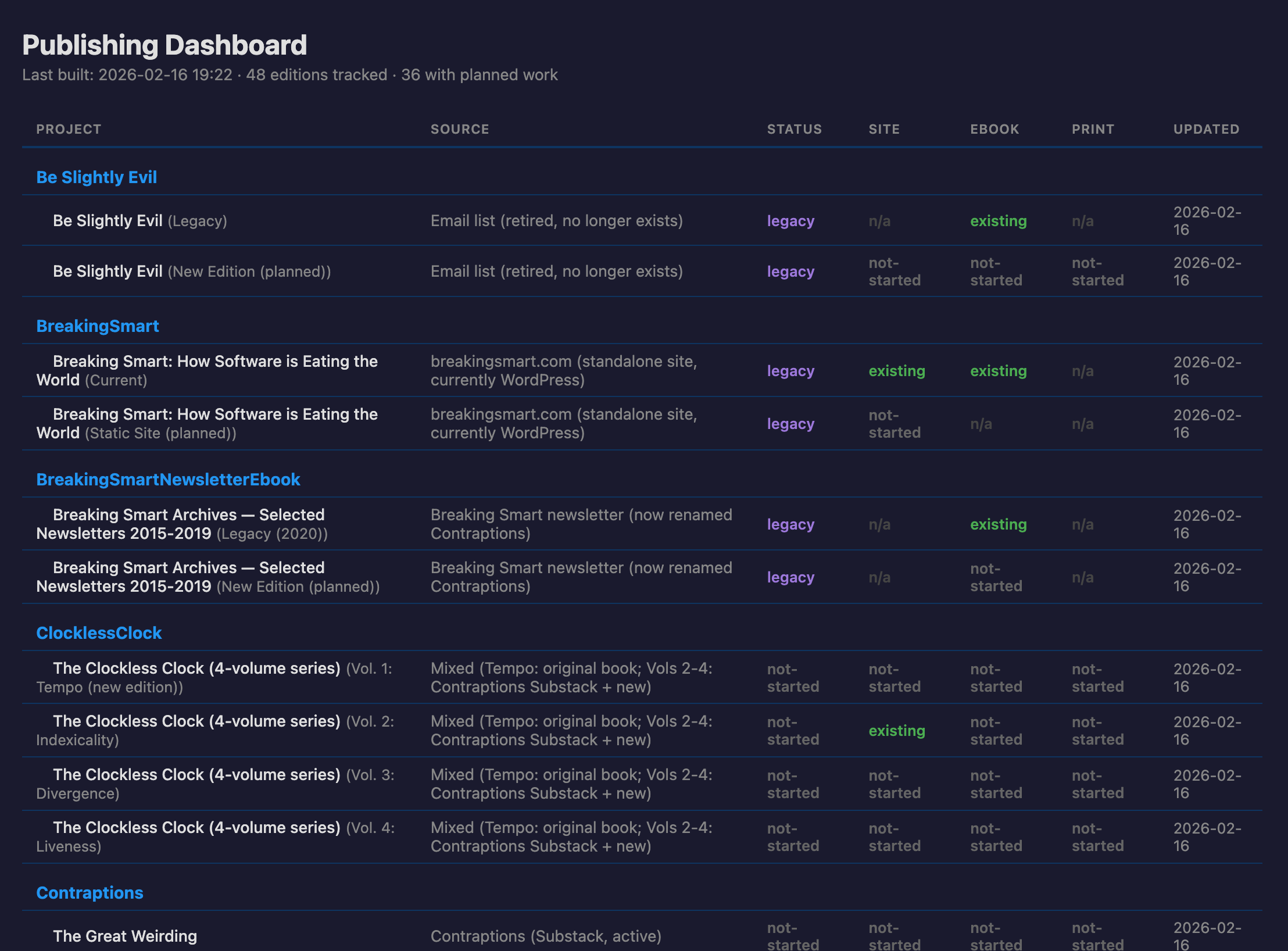
I now have two levels of dashboards going 😬. There’s a dashboard of books in the pipeline that currently shows 34 planned volumes, from both archival material and planned new writing…
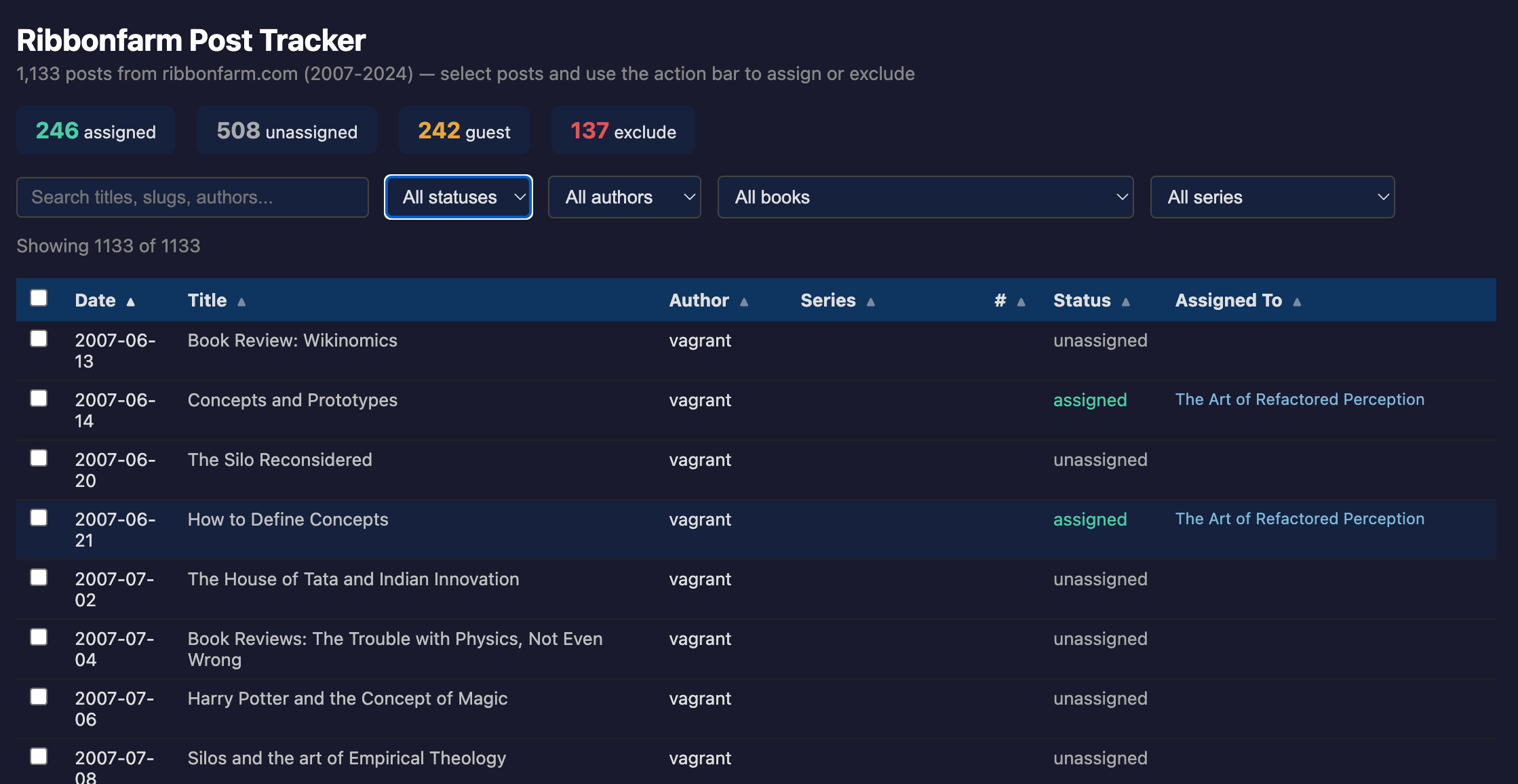
…And there’s a dashboard of bookification projects specifically for the ribbonfarm archive (as well as a migration project to move it to a museum-like archival site):
I saw this cartoon after I did all this, so it was doubly funny.
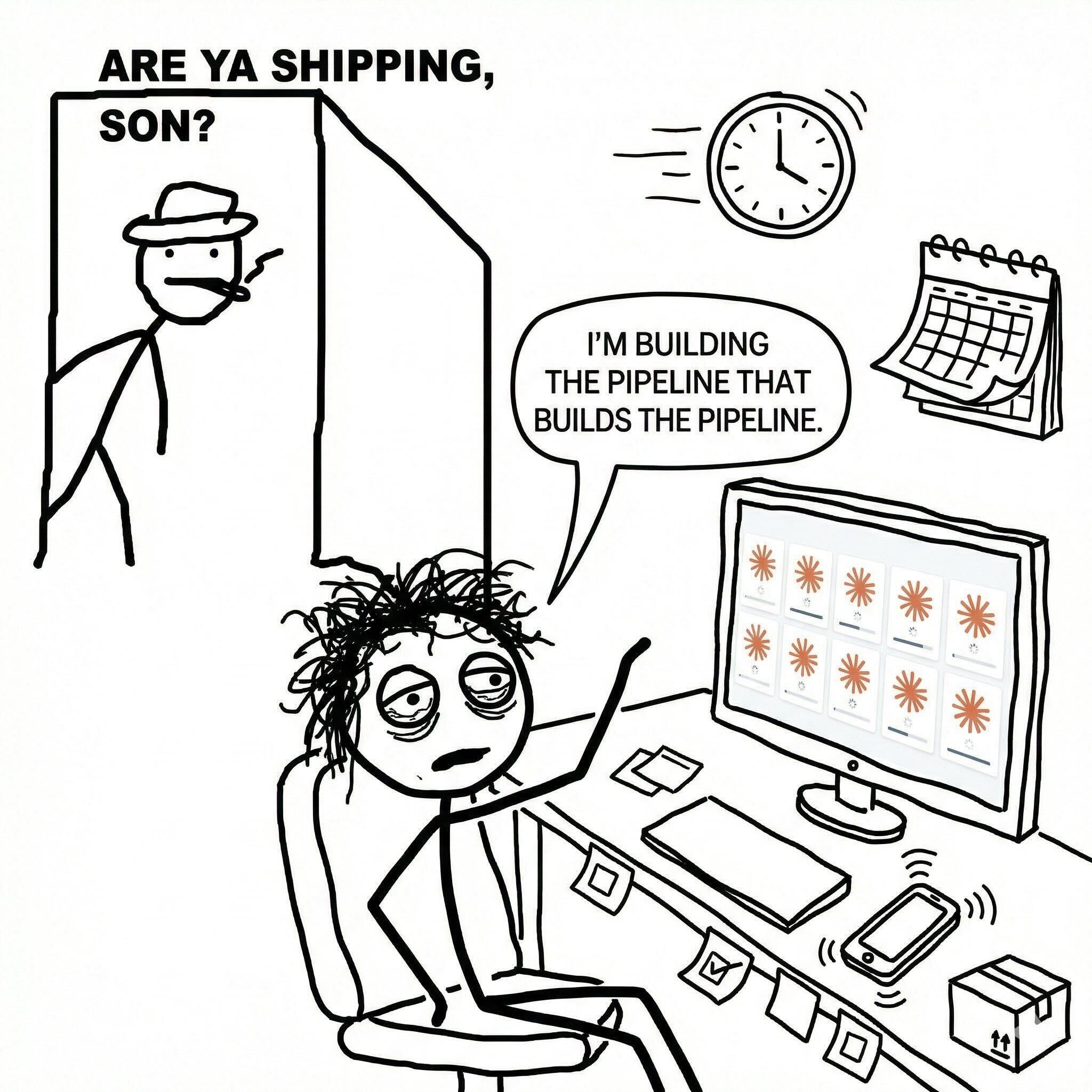
If this cunning Bond villain grade plan works out, I may be able to publish at least a couple of dozen books over the next few years. Probably 80% based on archival material, 20% new-material books.
I’ll be covering this emerging factory-grade self-publishing DevOps style automation craziness a bit in my nonfiction module of the workshop. I have high confidence now that this scaffolding will work. The biggest risk factor now is not the technology (bluntly: it works) but me, since good AI scaffolding removes all other bottlenecks and praxis frictions.
Anyhow, hope to see some of you at the workshop. Here’s the registration link again.
Will you record the session on longform? Will be asleep
Traveling both days but will catch up with it - very exciting!