

A side quest within my ongoing exploration of liveness lately has been applying the notion to writing. I don’t mean liveness in a figurative sense, such as a particularly well-conceived fictional character coming “alive” in a good novel. I mean a literal sort of liveness, marked by protean dynamism and interactivity affordances in the text itself. Of the sort portrayed as magic runes on the One Ring or Durin’s Door in LOTR or the horcrux-diary with a bit of Voldemort’s soul in it in Harry Potter and the Chamber of Secrets. Words that embody their own agency.
Text is alive when it can reshape or regenerate itself in response to the environment and the reader’s actions, but without there necessarily being a living speaker or writer producing the liveness in real time through some sort of rewrite loop that passes through (and arguably produces) something resembling personhood.
We’re learning that personhood-production is only one way to produce text, and not a particularly good way to produce living texts.
We’re currently reading The Invention of Nature by Andrea Wulf in the Contraptions Book Club. Chat thread.
In this post I’m concerned with living text produced by processes other than the default one — a live human speaker or writer responding to their environment in real time by modulating the stream of words they speak or type.
Note that oral vs written is not an important distinction here — both can be live or dead kinds of text (think of memorized speeches or phatic utterances for example, or written texts evolving through drafts based on feedback), even though it’s generally easier for humans to speak liveness than to write it. This is notably not true for computers. Some processes (such as transformer models) do mimic the temporal-serial quality of spoken or serially written text, but other processes (such as text diffusion) have an all-at-once atemporal quality to how they generate text.
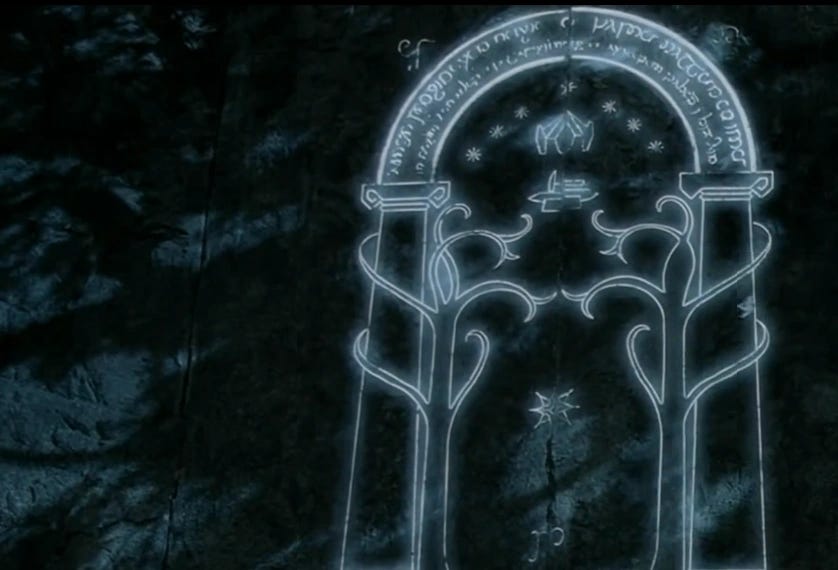
Historically, the idea that language can literally be alive in this sense has been the underlying conceit of belief in prayer and incantatory magic, but there has been no interesting sort of literal liveness for the magic-skeptics and atheists among us to engage with, outside of fiction.
Until quite recently, text was by definition nonliving. Ink on paper or pixels on screens. Pre-AI computers could lend a limited sort of near-liveness to text by generating it responsively in rigid ways (think text layouts that reflow/resize on a digital page, canned scripts in conversation trees, or tool tips and hover text in rich interfaces). But it was only with the discovery of LLMs (I’m increasingly certain it’s a discovery, like fractals, rather than an invention) that literal living text became a possibility. You can now trivially produce something like the talking portraits of dead people from Harry Potter, or the Young Lady’s Illustrated Primer from Diamond Age. Or the Hitchhiker’s Guide to the Galaxy. Piles of words infused with artificial life, living in “rocks we’ve tricked into thinking with electricity.”
So far, we’ve anthropomorphized this emerging capability by imputing a kind of speaker-being to live LLM-driven text-generation computing processes. We imagine a “chatbot” or “coding agent” or “customer service bot” as a speaker-being behind a living text stream, even though we recognize intellectually (at least those keeping up with how the tech works) that the processes are stateless, with memory jankily bolted on, sustaining an illusion of being. It doesn’t take much. As I argued over 3 years ago, in February 2023, when LLMs were much younger, text is all you need to sustain plausible illusions of personhood (and perhaps plausible illusions are all there are, and we fool ourselves into thinking we’re more).
The link between human-like personhood and the ability to produce live text is so tight that we tend to treat them as equivalent. To organisms that lack something resembling rudimentary language, we are inclined to attribute lesser forms of personhood. A cat’s meow language lends it more personhood than a tree’s chemical emissions, but less personhood than a chimpanzee that can use some sign language. And of course our human language, we tell ourselves, lends us the highest sort of personhood. So far AIs have reinforced rather than challenged this last bastion of our anthropocentric conceits. Our success with natural-language-based AI (including images, videos, code and scientific results generated with natural language prompts) far outstrips any other kind.
The textuality-personhood nexus was even turned into a prescient aphorism in Harry Potter that looks like an AI safety rule if you squint: Never trust something that can think for itself if you can’t see where it keeps its brain, where thinking in the Potter universe generally meant talking (the Sorting Hat, Tom Riddle’s diary). If that caution has merit, we’re getting ourselves into a lot of trouble. Fortunately I don’t think it does. Not only does it not matter where the brain lives, there need not be a biomorphic brain producing personhood at all. Something somewhere just has to be doing the equivalent of multiplying matrices.
So text that exhibits liveness need not have intelligible personhood behind it. Text is perhaps all you need for personhood illusions, but generating personhood illusions is not all living text can do.
To take a trivial non-AI example, programmable highway signage can be configured to produce kinda-living text that does not suggest a coherent person behind the scenes. We don’t think of dynamically updated toll rate messages as coming from a toll bot ghost in the highway machine.
The most obvious way to produce living text with LLMs is to construct a fictional person as the generator, but there are obviously other ways:
Protocols that emit rich logging/tracing signatures
Environments like smart homes that speak to you via distributed interfaces
Distributed swarm-like systems that rearrange themselves by rules that happen to produce texts (think the sorts of pixellated displays humans put on in stadiums)
Smart letters/tokens/glyphs that respond to their neighborhoods within words, scrambling and unscrambling from state to state in ways that don’t correspond to serial “rewrites” by “persons”
The ephemeral “thinking” transcripts that flash by as we interact with chatbots or coding agents are an edge case — a theatrical reduction of whatever is going on behind the scenes to be user-comprehensible via inner-monologue personhood UX metaphors.
We occasionally deal with texts through more unusual processes, such as when solving puzzles (jumbles, wordles) but 99% of the time, we produce living texts by enacting personhood.
How do we do more, now that we can? How can we write liveness other than as living persons writing one dead word at a time? How can do more than personhood mimicry with generative language capabilities?
This isn’t a new interest of mine by the way. I seem to have been circling this theme in many older writings:
Rediscovering Literacy (2012)
But with the discovery of LLMs, I think I finally understand what I’ve been circling. It’s writing liveness, without the personhood bottleneck getting in the way.
In exploring this question, curiously, I’ve concluded that the most interesting kind of text is the kind I found least interesting 10 years ago — marketing copy. Big tech advances have a way of flipping sacred and profane. I find literary texts the least interesting for experimenting with writing liveness. Marketing copy is text attached to a living non-person entity such as a product or service. It must evolve with the offering, accurately represent it, anchor a narrative for it, and personalize and customize customer interactions with it. Marketing copy is only as effective as it is alive, and much of it fails by being too dead. Mostly because we’ve only just invented technologies capable of injecting liveness into text reliably. So far we’ve mainly used it in personhood form factors, but a lot more possibilities are becoming evident.
Marketing is a job for living text, not writers or marketers. Typically, marketing copy suffers when it is limited to personhood (think about it: Apple’s brand narrative is not a story told by a person, not even Steve Jobs, and cult-of-personality or customer-persona-based brand narratives tend to suck). PR-speak is often derided as a “voice from nowhere” but that’s exactly the right starting point for really unleashing the potential of AI-generated text. Text limited to being from somewhere, or worse from someone, is far too impoverished a view of language now.
I’m just starting to experiment with this whole line of thought with the copy for some little apps I’m building, and the texts are nothing like anything “I” have “written” before. But they’re very alive. I’ll share more about these in a future post.