

It looks like over a thousand new readers signed up over the last week, mainly due to the Cognitive Mercantilism post, taking me past 27k. I think I last had a viral hit of that magnitude 7 years ago, with the Internet of Beefs (2020).
Times have changed. These days going viral means people make and share AI-generated summaries, explainer videos and infographics about your post, including in other languages. It’s rather gratifying. I also saw a argument-logic-flow diagram go by. Pretty soon, people will be demanding Lean proofs for my more outrageous ideas.
Welcome aboard new readers.
Since I’m long overdue for a re-introduction to the reading public anyway, to the point that many people seem to think I’m dead (especially on X, where I stopped posting after the Muskening), this seems like a good time to attempt one. A writerly inner-game re-introduction, not the basic biographical sketch, which you can find here.
Halloween is actually a good occasion for a re-introduction. It’s been just around a year since I adopted the motto that best explains who I am these days as a writer, Be Slightly Monstrous. I’m a one-year-old monster in training.
As a doctrinal directive, the motto simply means: adopt AI without reservations, and let it freely transform you.
As a philosophical stance — hopefully a slightly alarming one — it is something like a declaration of resistance to the Nostalgia for the Human that’s been overtaking the zeitgeist.
The most visible sign of my growing monstrousness is that I freely use AI in every aspect of my writing, and as of a month ago, I don’t even segregate or declare it anymore, since it’s my default now. It’s fully hand-crafted writing that’s the exception, requiring labeling. You can find my AI use philosophy on my About page.
But that’s the tip of the iceberg.
Over the last couple of years, I’ve increasingly started to operate by a whole set of Strange New Rules for Being Slightly Monstrous, in every aspect of my work and life. And it’s all got to do with AI one way or another. It helps that half my work is consulting for the leadership of a great frontier AI company (Tenstorrent — go buy their computers), so I get a ringside view of just how powerful this emerging technology is.
The other half — well, I’ll get to that. It’s a little harder to explain. It has to do with protocols.
This post is a rare handwritten one because the topic is personal enough it’s easier to just write it than to convey enough about myself to an AI to generate it. But by default, I always use AI for writing these days, and am enjoying my centaur-writing more with every post. With every post, I learn new tricks and techniques and improve steadily.
Having to drink blood, avoid garlic, and not being able to go out in the sun is a small price to pay for this growing sense of nameless power.
And I am getting good enough at it (logging a genuine AI-assisted viral hit is one sign) that even many of those who declare that they hate generated writing find themselves enjoying the writing, and then discovering after reading, much to their chagrin, that it was written with AI. I don’t even try to disguise the AI voice or characteristic LLM tics. Quite the opposite. I leave the natural terroir of the models I use almost untouched.
Full collaborators deserve to speak in their own voice. I edit AI text the way I edit other human writers — in a maximally laissez-faire way, minimizing how much I reshape their native voice.
The technology really is getting good enough that you can work this way. It feels increasingly silly to fight quixotic battles to go against the grain of the medium for no real benefit beyond pandering to the tastes of human supremacists.
I saw a comment go by that I must have fine-tuned an AI model on my extensive (~2.5m words) corpus of handwritten archives to write with AI the way I do. Nope. It is vanilla ChatGPT (I save my Claude tokens for coding).
I can probably teach people how to write like this, but 90% of it is just the courage to be slightly monstrous. Only 10% is teachable tips and tricks with prompts and harnesses. If you think you have an aptitude for writing, all you really need to do to transform that into an aptitude for writing with AI is to risk the scorn, contempt, and opprobrium of your tastefully aghast writerly friends. And once you get experimenting, the learning and dopamine follow, you make new friends, and life goes on. It’s really not that hard.
More than my failed experiments with AI writing, I think it is the successful experiments that really make some people mad. I have my theories about why, which I’ll write up some day. Maybe when (and if) I teach a writing-with-AI course (where 90% of the content will be me yelling “be more monstrous dammit!”)
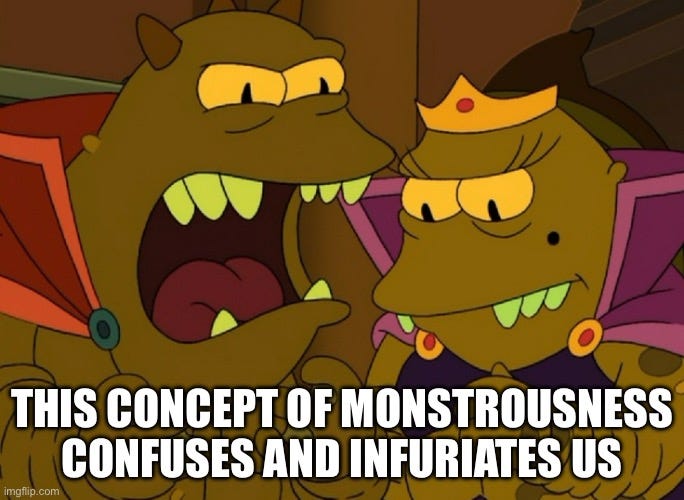
Anyway, my monstrous use of AI in writing has confused and infuriated even many of my oldest and most loyal readers, some of whom have sent me mournful, betrayed-sounding notes over the last couple of years. I am sure it will turn off some fraction of the new readers who will likely feel betrayed that they signed up for this newsletter on the strength of an AI-assisted essay.
A couple of decades ago, this would have bothered me. But I’ll be turning 52 in November. A full deck of cards so to speak. And I increasingly find myself living by Clarke’s Law: “When a distinguished but elderly scientist states that something is possible, he is almost certainly right. When he states that something is impossible, he is very probably wrong.”
I am not yet actually elderly, and I’ll never be distinguished, but I am increasingly confident about betting on things I think are possible. Played asymmetrically ( (I tend to shut up about things I consider impossible), Clarke’s Law offers a nice convex strategy for avoiding avoiding conservatism as you age. Even if it means becoming slightly monstrous.
The motto grew out of what is probably my most influential essay of the last few years, The Gramsci Gap (2025), which was an extended riff on the Gramsci-Zizek quote about how the old world is dying, the new world is struggling to be born, and it’s the time of monsters.
That essay in turn, came out of a line of thought that started for me in January 2023, in an essay called Disturbed Realities, which was the result of me spending most of 2022 working through the complete works of H. P. Lovecraft, J. G. Ballard, and a book I think is one of the most important of the century so far, Benjamin Labatut’s When We Cease to Understand the World.
I read a lot, but this particular reading binge was special because it was how I personally emerged from the planetary chrysalis that was Covid. I did a keynote about these ideas at an event in Singapore in early 2023, which was when the ideas really started to gel (the Shoggoth meme featured prominently in my talk). I’m finally starting to work on a short book pulling all these ideas together from various essays and talks. It will be called New Nature.
The Labatut book was as formative for the current chapter of my current writing life as The Office was for the previous chapter.
For those who came in late, the previous chapter of my writing life was a blog called Ribbonfarm, which was most famous for a 6-part series I wrote in 2009-13 about The Office called The Gervais Principle, exploring the dynamics of sociopathy, cluelessness, and loserdom in organizations. I retired that blog in 2023 because Wordpress was becoming unmistakably a part of the “old world dying” in the Gramsci Gap, and I do not like to hitch my ride to dying things. Ribbonfarm is now an archived static site haunted by an AI-powered ghost-digital-twin (aka RAG bot) of mine I call vgr_zirp. You can talk to it about everything I wrote through 2022, including about why it’s called vgr_zirp. I’m building a fuller living-digital-twin bot that will cover all my writing, but that won’t be ready for a while. It’s a more complex design challenge.
The Gervais Principle inspired my old motto, Be Slightly Evil, which was also the name of a short-run newsletter I wrote around that time. Together, those two works defined my writerly persona through much of the 2010s, as well as the positioning and differentiation of my consulting business, which I started in 2011. To this day, those two works generate most of my consulting leads.
These days though, I turn away such leads. My tastes have changed with age. Now I like to work with leaders and organizations interested in becoming slightly monstrous by going all-in on AI (here’s my consulting page if you’re interested). As with individuals, I’m convinced the challenge for organizations and their leaders is 90% the willingness to be sufficiently monstrous. Only 10% tips and tricks.
Looking back on the old chapter, the essay that seeded this current chapter was one that did not go viral, but long-time readers know has been my main personal lighthouse essay from the previous decade: On the Design of Escaped Realities (2015). It’s sort of like the Frodo-finds-the-ring-and-meets-Gollum episode in The Hobbit. Escaped Realities served as the theme of the final edition of a conference I used to run in the 2010s, Refactor Camp, in 2019. The community that had grown around Ribbonfarm over the previous decade met one last time, and then scattered to the winds. Covid happened just a few months later, and my journey into monster-dom began in earnest.
In hindsight, the essence of the escaped reality idea was that being mildly psychotic was a better idea for the coming decade (2015-25) than being mildly neurotic, which had been a good idea for the previous decade (2005-14). It has taken me over a decade from that point to learn to metabolize and manifest that idea, by Becoming Slightly Monstrous.
Along the way, the tagline for my old blog changed from “experiments in refactored perception” (a mildly neurotic tagline) to “constructions in magical thinking” (a mildly psychotic one). The name of this newsletter, Contraptions, is an attempt to True Name this chapter in a mildly psychotic way, with a whiff of plausibly deniable crackpottery around it. The bot I’ve been training on this chapter of writings is called vgr_gramsci by the way. It is much more psychotic than vgr_zirp, but much less neurotic.
As Douglas Adams observed, “if life is going to exist in a Universe of this size, then the one thing it cannot afford to have is a sense of proportion.” So you have to periodically choose how exactly you’re going to distort your sense of proportions. A dash of psychosis seems to work very well for 2026, the way a dash of neurosis was helpful in getting through 2007-14.
The optimal amount of derangement these days is not zero. Since Trump Derangement Syndrome and Woke Derangement Syndrome are past their sell-by dates now, most people are choosing between AI Derangement Syndrome and Humanism Derangement Syndrome. The calibrated psychosis that helps me be slightly monstrous includes a stiff dose of HDS. I’m constantly looking over my shoulder in case an unaligned humanist is creeping up behind me to knock me out with a hand-crafted cane made from organic wood using flint tools.
But I was practicing being psychotic before it was cool, and before AI made it easy for everyone to be a little bit psychotic, if only as a treat. And slightly monstrous.
Jokes aside, as you can probably tell, this is not really a bit. Be Slightly Monstrous is a serious philosophy for me. One that has taken shape over a decade, and that I’ve bet money and reputation on.
If you need more Proof of Derangement: I collaborated with artist Simon Denny to put on an art exhibit called Monsters Between Worlds at this year’s Venice Biennale, and I’ve helped instigate and found a new magazine called Monstrous Times over the last year, which you should subscribe to. I’ll be writing more fiction there.
Monstrous Times helps explain precisely how to Be Slightly Monstrous.
What I do not mean by my motto is monstrousness in the sense of fantasy. What I do mean is monstrousness in a particular science-fictional sense (a Labatutian-Lovecraftian-Ballardian sense) — a slightly monstrous human is one who has been transformed through co-evolution with emerging technology in a Gramsci Gap, and who has come to viscerally embody the strange new rules of that technology.
This notion emerged out of my other big obsession over the last 5 years, protocols. This has been the other half of my work in recent years, and it has shaped my philosophy and writing a lot (not least because it involved a lot of writing and editing of other people).
Between 2023-26 I was running a program for the Ethereum Foundation called the Summer of Protocols. This has now evolved into a new organization called the Protocol Institute, where I’m the Director of Research (currently unpaid, because the organization has no money yet). The Monstrous Times magazine also came out of the Summer of Protocols, so it’s a sibling project to PI. Specifically, it came out of an idea we explored through SoP that science fiction is about strange rules, while fantasy is about special people, or “chosen ones.”
It’s an idea we call Chiang’s Law, after Ted Chiang, who first articulated it. Right before he chose AI Derangement Syndrome as his chosen path through the Gramsci Gap. I like the irony. I always like irony. Monsters like irony (are monsters GenX? 🤔).
Anyway, for nearly two years, a bunch of us have been exploring the emerging future through fiction based on this premise (me as editor more than writer, though that will change soon). We’ve dubbed this new genre protocol fiction. One of my own contributions to this emerging genre is this story, The Signal Under Innsmouth (April 2025), a Lovecraftian pastiche (AI-generated of course!). This was a bit of a personal breakthrough for me, both in terms of revealing just how good and actually entertaining AI-generated writing could be, and in making legible the idea of becoming monstrous through technological transformation, and the internalization of strange new rules of being and becoming.
This leads to an interesting thought. What does it mean to not embrace co-evolution with technology; to not accept such transformation in what it means to be human?
It means being attached to a particular, historically contingent frozen snapshot idea of what it means to be human, based on the people alive and grappling with the question of AI circa 2024. A chosen people, presumably representing the pure acme of human development, who are choosing to head down a cul-de-sac of being and becoming. Who increasingly inhabit an enervating fantasy of humanism; “acting dead” to borrow a term from Bruce Sterling.
There’s a deep irony here that I’m still thinking through: That attempting to preserve your humanity as you navigate the Gramsci Gap may be the most deadening thing you can do, while embracing monstrousness may allow you to tap into the deepest kinds of liveness you can access today.
Again, this is not a bit. And it’s not a drill either. It’s a real unfolding praxis for me. If using AI is going to do irreversible horrifying things to my brain, I’m already partway there.
I’ve done two talks on this idea in the last month alone (one as part of the Biennale exhibit, and one as part of the Monstrous Times official launch party), and I nearly have the idea properly worked out enough to write about. So expect to see it pop up here soon. It’s going to be part of the New Nature book I’m going to tackle in November.
Oh, and speaking of liveness, that’s another of my pet themes, and next year, it will be the focus of the book club I run (this year, the book club is exploring another of my favorite concepts, Divergence). You may want to read my two posts so far on this topic, In Search of Liveness, and Engineering Liveness. It’s how AI and protocols are coming together for me, conceptually. I hope some of you join the book club, which also feeds a research group on psychohistory (yes, the Asimovian kind) at the Protocol Institute.
Anyway, that’s it for my introduction for new people (and re-introduction for those discovering that I’m now undead). Hopefully that provides some orientation in the thought spaces I like to explore with my fellow monsters-in-training, and also gives you a sense of where the human fraction of ideas like “cognitive mercantilism” come from.
Happy Halloween!